Nothing quite ruins a peaceful weekend like looking up at your living room ceiling and noticing a growing, brown water stain. Suddenly you are grabbing buckets and lying awake at 2 AM, wondering if you just need a simple patch job or if you are about to drain your savings account on an entirely new roofing system.
Guessing is risky. Ignoring common types of roof damage usually leads to a cascade of hidden problems. Water doesn’t stop at the shingles; it seeps down, rotting out the wooden decking, ruining your attic insulation, and eventually destroying your interior drywall. A problem that could have been solved for a few hundred dollars can easily turn into a structural headache if it’s left unchecked.
When you are weighing roof repair vs roof replacement, you need facts, not sales pitches. In this guide we break down what actually happens during both processes, how to judge the severity of the damage, real-world cost comparisons, and the exact steps to protect your home and your wallet.
Understanding the Basics: Repair vs. Replace
Quick answer: When localized damage affects less than 30% of the roof surface and the underlayment is sound, a targeted repair is usually enough.
What Counts as a Roof Repair?
Think of a roof repair as a highly targeted spot treatment. You aren’t addressing the entire house; you are fixing a specific, isolated headache. This might mean replacing a few blown-off asphalt shingles, swapping out rusted flashing around a chimney, sealing up a pipe boot, or fixing a localized puncture from a fallen tree branch. The goal is to extend the life of a roof that is otherwise in good condition.
What Counts as a Full Roof Replacement?
A full replacement is exactly what it sounds like. A roofing contractor comes in with a crew and tears everything off your house right down to the bare wooden decking. From there, they build a brand-new system from the ground up: new ice-and-water shield, fresh underlayment, new edge metals, proper roof ventilation, and finally the new shingles or metal roofing.
Key Differences in Scope, Timeline, and Disruption
To make the distinction crystal clear, here is what to expect from each project:
| Feature | Targeted Roof Repair | Full Roof Replacement |
|---|---|---|
| Project scope | Highly localized (one specific area) | Complete property coverage |
| Timeline | 2 to 4 hours | 1 to 3 days (depending on size) |
| Property disruption | Minimal noise, no dumpsters needed | Loud, messy, requires heavy equipment |
| Lifespan impact | Fixes the current leak, doesn’t add years | Resets the clock (20 to 50+ years) |
| Cost profile | Hundreds of dollars | Thousands to tens of thousands |
Top Signs Your Roof Only Needs a Repair
Localized Storm or Wind Damage
If a heavy summer storm rolls through with high wind and snatches a few shingles off a single corner of your house, you are usually in luck. As long as the paper underlayment underneath didn’t tear and expose the bare wood, this is a fast, straightforward fix. A roofer can match the color of your existing shingles, slide the new ones into place, and secure them down. Widespread storm damage is a different conversation.
Isolated Roof Leaks Around Flashing or Vents
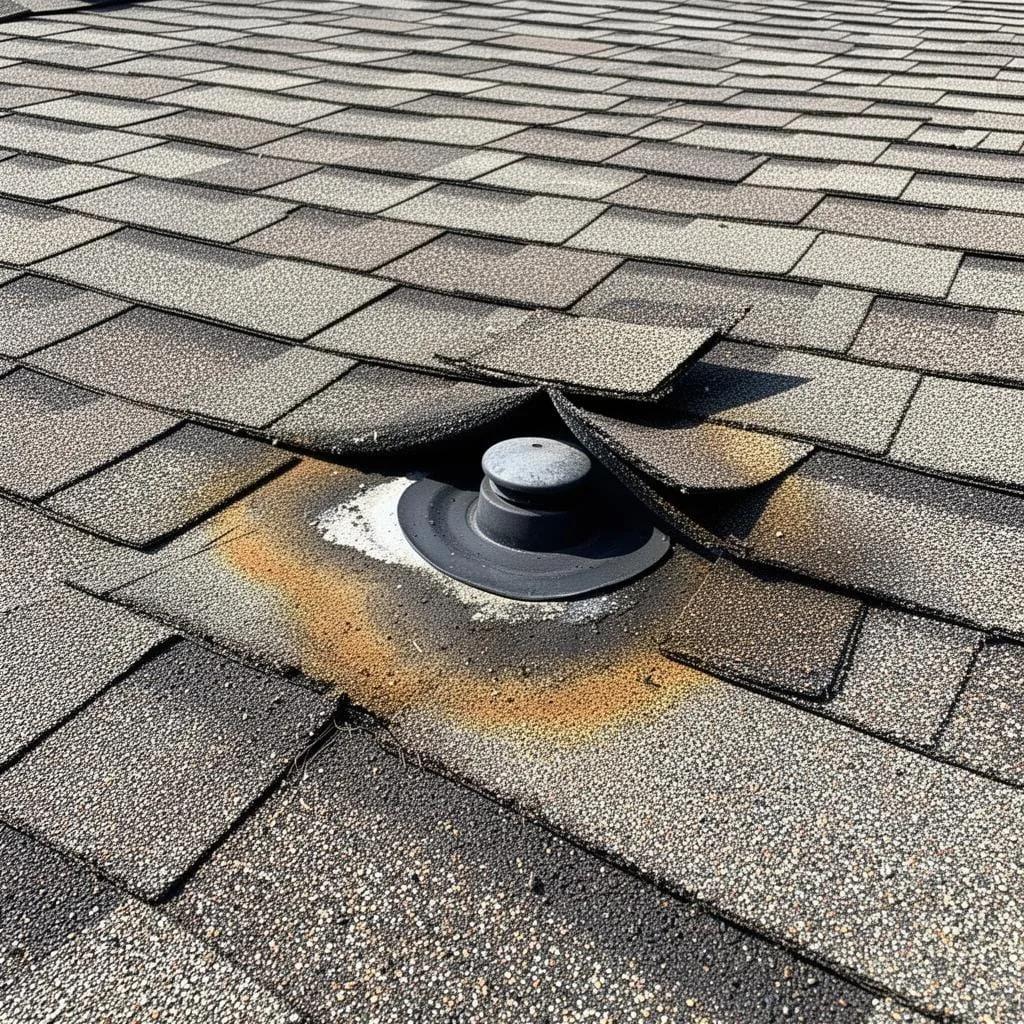
Here is a secret from the roofing trade: most of the roof leaks we get called out for aren’t failing shingles at all. The water is usually sneaking in around penetrations. Chimneys, skylights, and plumbing vents rely on metal flashing and heavy caulk to stay watertight. Over time that caulk dries out, cracks, and flakes away, and water intrusion happens right at those seams. Resealing or replacing just the flashing is basic maintenance that doesn’t require a whole new roof.
Minor Granule Loss in Specific Areas
The sandpaper-like grit on your shingles serves a real purpose: it protects the asphalt from the sun’s UV rays. If you see a little granule loss in your gutters after heavy rain, especially near the drainage valleys where water flows heaviest, that is standard wear. A contractor can swap out the beaten shingles in that specific valley rather than re-roofing the whole property.
Clear Warning Signs You Need a Roof Replacement
Reaching the End of the Roof’s Lifespan (20+ Years for Asphalt)
Building materials do not last forever. Standard architectural asphalt shingles turn brittle and rigid as they age, losing their flexibility and their ability to shed water efficiently. If your house is pushing 20 or 25 years, patching it is like putting a band-aid on a broken arm. Throwing money at endless repairs on a dying roof is a poor financial strategy.
Extensive Sagging Rooflines and Structural Compromise
Step back into the street and look at the peak of your house. Does the roofline dip, warp, or sag in the middle? That is a major red flag. Shingles don’t sag, wood does. A sagging roof means the structural trusses or the decking underneath are failing, usually from prolonged moisture or poor ventilation. You cannot fix a sag with new shingles; that is a structural replacement.
Widespread Water Damage, Rot, and Compromised Decking
If a contractor goes into your attic, turns off the flashlight, and sees daylight shining through the roof boards, the game is over. Widespread water damage, active mold, moss and algae growth, and soft, spongy decking mean the entire barrier has failed. Left alone, that leads to a collapsed ceiling.
Widespread Curling, Buckling, or Granule Loss
When the shingles are curling up at the edges or buckling and waving like potato chips across the whole house, the core material is baked. This happens when the attic isn’t ventilated properly, cooking the shingles from underneath. At that stage they offer almost no defense against the next rainstorm.
Roof Repair vs Roof Replacement Cost Comparison
Average Cost Breakdown for Minor and Major Repairs
Homeowners want the bottom line. For a basic shingle patch, flashing reseal, or minor leak repair, you can expect to spend between $300 and $1,000. If we have to pull up a section of the roof to replace a small sheet of rotted decking, that structural repair pushes the price closer to the $1,500 to $2,500 range.
Average Cost Breakdown for Full Roof Replacements
Replacements are major construction projects. Depending on the square footage of your home, local building codes, and the materials you choose (asphalt vs. metal vs. tile), installations usually range from $8,000 to $20,000+. Our NJ roof replacement cost guide breaks down where your specific square footage and material choice land on that spectrum.
The “Rule of 20”: When Repair Costs Outweigh Replacement Value
Out in the field we use a quick gut-check called the “Rule of 20” to figure out whether fixing a roof still makes financial sense.
Here is the deal: if the repair bill is going to be more than 20% of the cost of a brand-new roof, and your shingles are already past their half-life, you should just replace the whole thing.
Look at the math. If a total replacement costs $10,000 and fixing up your 15-year-old roof runs $2,500, patching it is a waste of cash. You are paying a premium to slap a band-aid on a dying system that is just going to spring another leak next year.
Factors to Consider Before Making Your Final Decision
Roof Age and Expected Lifespan Remaining
Age is the ultimate deciding factor. An older, fragile roof needs replacing because even the vibration of a worker walking on it to fix a small leak can crack surrounding brittle shingles. A five-year-old roof with a hole from a rogue tree branch just needs fixing.
Extent and Location of the Damage
If the damage is isolated to one specific slope on the back of the house, a targeted repair is highly effective. But if you took hail damage that dented and bruised the shingles across every plane and angle of the property, a full replacement is the only viable path forward.
Future Plans for Your Home (Staying Long-Term vs. Selling Soon)
Is this your forever home, or are you moving in a year? Buyers love new roofs. A fresh roof with a transferable warranty offers an excellent return on investment and keeps buyers from demanding big concessions after the home inspection. If you are selling soon and the roof is structurally sound with only minor cosmetic issues, a simple repair might make more sense.
Homeowners Insurance Coverage and Claim Considerations
If a severe storm, tornado, or heavy hail wrecked your property, do not automatically assume you have to pay out of pocket. Your homeowners policy might cover the entire replacement cost, minus your deductible. Always review your specific coverage limits and work with a contractor who understands the insurance claims process.
Why Trust Quality Roof Pros?
Hands-On Field Experience
We don’t sit behind a desk and guess what is happening on your property; we spend our days up on ladders. The team at Quality Roof Pros brings over a decade of real, hands-on diagnostic and contracting experience to every residential job we take on. We know what hidden rot looks like and how to solve it permanently.
Honest, Transparent Inspections Over Sales Pressure
Homeowners here know our reputation is built on telling the truth. Our customer-first approach means honest assessments take priority over pushing sales. If your home only needs a $400 patch to stay watertight for another five years, we aren’t going to sit in your kitchen and try to sell you a $15,000 replacement.
A Commitment to Quality Craftsmanship and Warranties
We are a fully licensed and insured local business, and we back our work with real guarantees. When you work with us, you get transparent pricing, straight talk, and detailed photo documentation of your roof’s condition, so you can see exactly what we see.
Frequently Asked Questions
How do I know if I need a repair or a full replacement?
If the damage is contained to one small area and your roof is under 15 years old, repair it. If the shingles are old and curling, or you are finding multiple leaks inside, it is time to replace.
Is it cheaper to just keep repairing my roof?
Only on day one. Paying for constant patches on a dying roof is throwing good money after bad. A replacement hurts upfront but saves you cash in the long run.
How long should my asphalt roof actually last?
Assuming your attic is ventilated properly, a standard architectural asphalt roof should give you 20 to 25 solid years.
Can you fix a leak without tearing off the whole roof?
Absolutely. Most isolated leaks happen around chimneys or pipe vents where the caulk or metal flashing dried out. That is a fast, local fix that doesn’t require a total tear-off.
How much does a basic roof repair cost?
Most minor patch jobs run between $300 and $1,000. That usually covers sliding in a few missing shingles or sealing up a leaky pipe boot.
Will my homeowners insurance cover a new roof?
Only if a sudden event actually wrecked it, like heavy hail, high winds, or a fallen tree. If your roof is just old and failing from normal wear and tear, the insurance company will deny the claim.
What does it mean if my roof is sagging in the middle?
It means the wooden structure underneath is rotting or failing. Shingles don’t sag, wood does. You will need a structural replacement as soon as possible.
Can I just nail a new roof over my old one?
We don’t recommend it. Nailing a second layer over the first traps heat, hides rotting wood, and adds heavy, unnecessary weight to your home’s framing. Tear it down to the wood and do it right.
How long does a full roof replacement take?
For an average-sized residential home, a professional crew can usually tear off the old roof, fix the decking, and install the new system in one to three days.
How can I find out what my roof actually needs?
Get an honest contractor up on a ladder. Quality Roof Pros offers free, photo-documented inspections so you can see exactly what we see, with zero high-pressure sales attached.
Conclusion and Next Steps
Waiting to see if a leak gets worse never makes roofing problems cheaper; it only increases the water damage inside your walls. Understanding the reality of roof repair vs roof replacement is how you make a sound financial decision for your property.
When it comes to the structural integrity of your home, don’t guess. Book a professional roof inspection and get ahead of it. Our experts will give you a free, photo-documented assessment so you know exactly what your roof needs to keep you safe and dry. Schedule your free inspection or call (732) 770-3867.