
Our Services
Roof Leak Repair in NJ - We Find the Leak and Prove It Before We Fix It
Family-owned, Brick Township-based. Owner Charles Kearns has been in construction since 1978. Free leak inspections at (732) 770-3867.
Roof leak repair starts with finding the actual entry point - not the stain on your ceiling. Water rarely drips where it enters: it travels along rafters, the deck, and the underlayment before it lets go, which is why patches placed over the stain so often fail. Quality Roof Pros is a family-owned roofing contractor based in Brick Township. Owner Charles Kearns has been in construction since 1978. We diagnose leaks across Ocean, Monmouth, Middlesex, and Atlantic Counties with a free inspection that works the attic, the deck, and the shingle field, then puts the findings in a written photo report you keep whether or not you hire us. Once found, the repair is backed by a 30-year Quality Roof Pros labor warranty. Active leak right now? Call (732) 770-3867 - we answer 24/7 and dispatch tarping crews when safe-climb conditions allow.
Why the Stain Is Almost Never Where the Leak Is
The most common leak-repair failure in this business isn't bad workmanship. It's a correct patch in the wrong place.
Water gets in at a flashing gap, a cracked pipe boot, or a lifted shingle edge, then follows gravity along the path of least resistance - down a rafter, across the top of the underlayment, along the underside of the deck. It drops at the first seam, nail head, or sag it meets. By the time it stains your ceiling, it can be a room away from where it entered. Chase the stain and you fix a spot that was never leaking.
That's why we treat diagnosis as the product. Anyone can swap shingles. The job is proving which detail is actually letting water in - with photos - before a single repair dollar gets spent.
How We Find It - Attic, Deck, and Field
Four steps, same order every time. The evidence decides, not a hunch from the driveway.
Attic First
We start under the deck with a flashlight, not on top of it. Rust trails on nail tips, dark staining on the rafters, matted or discolored insulation, daylight around a penetration - the attic records every trip the water has taken. We trace the trail upslope to the highest wet point. That's the neighborhood of the entry.
The Deck
Walking the roof over the wet zone tells us how long the water has been getting in. Soft spots and sag lines mean the plywood has been wet for a while and the repair includes deck work. A firm deck means we caught it early and the fix stays small. You find this out before the estimate, not during the job.
The Field
Then the surface above the trail: chimney and step flashing, pipe boots, valleys, ridge lines, and the shingle bond. We're looking for the one defect that lines up with the water path below. When the trail and the defect meet, that's the leak - and it gets photographed on the spot.
The Written Diagnosis
Photo report and written findings in your email before we leave - entry point, water path, what it will take to fix, and a line-item estimate. It's yours to keep whether or not you hire us for the repair.
What's Usually Leaking on a Jersey Shore Roof
Four counties of salt air, nor'easters, and freeze-thaw winters produce a predictable lineup. These six culprits account for nearly every leak we trace.
- Flashing. Chimney, step, and counter-flashing are the number-one leak source we trace. Salt air eats galvanized flashing in about a decade, and the failure is a hairline gap you'd never spot from the ground.
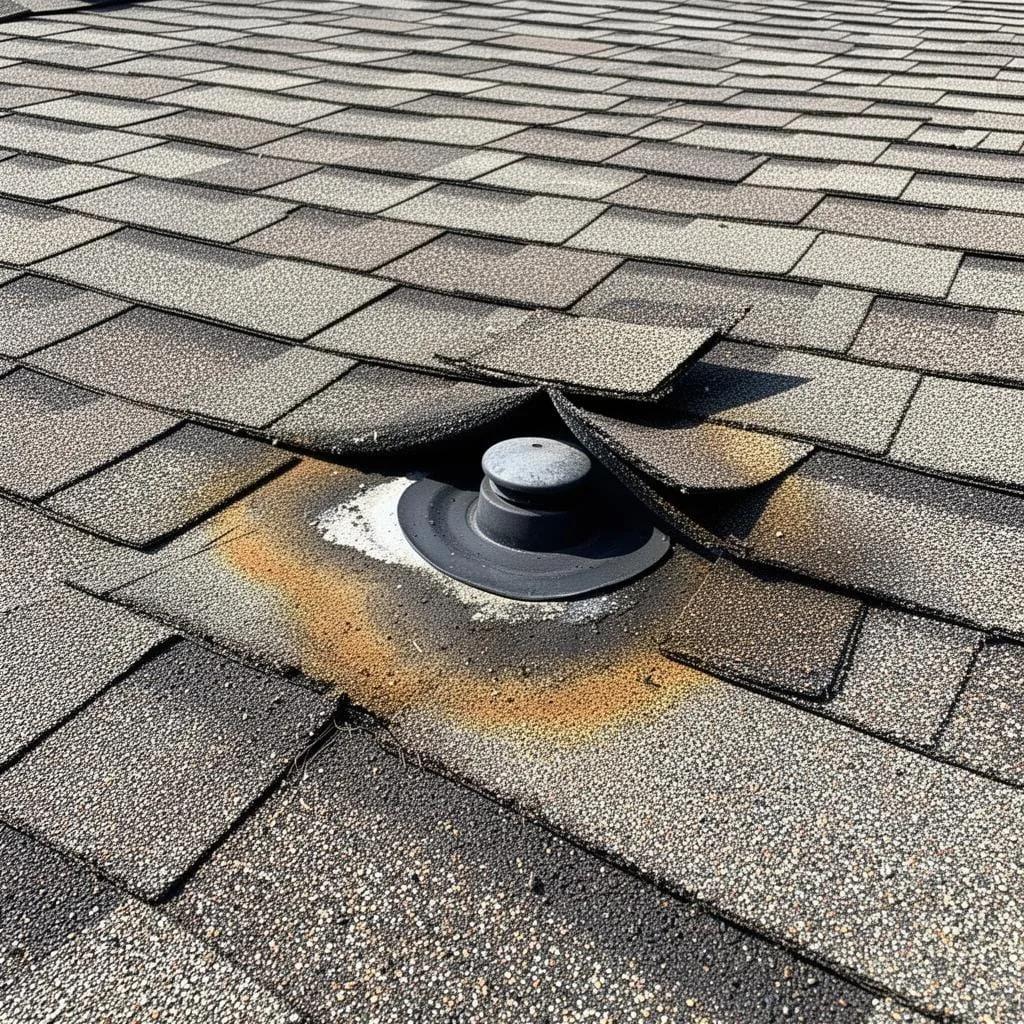
- Pipe boots. The rubber collar around a plumbing vent cracks from sun exposure long before the shingles around it look worn. A failed boot leaks straight down the pipe into a bathroom or closet ceiling.
- Valleys. Two roof planes drain into one channel, so a valley moves more water than anywhere else on the roof. Debris, worn shingle edges, or missing ice and water shield turn it into the first place heavy rain gets through.
- Wind-lifted shingles. A gust breaks the adhesive bond, the shingle lies back down flat, and the roof looks fine from the street. It sheds normal rain and leaks in wind-driven rain - the signature of the leak that "only happens in storms."
- Nail pops. A backing-out nail tents the shingle above it and gives water a wick point. Small, cheap to fix, and nearly invisible until someone walks the field looking for it.
- Ice dams. Late-winter back-up along the eaves pushes meltwater under the shingles. If your leak shows up in February near an exterior wall, this is the first suspect.
Tarping Is the Stopgap, Not the Fix
If water is coming in right now: place a bucket, move what you can, photograph the ceiling, and call (732) 770-3867. Don't go on the roof during active weather - that's our risk to manage, not yours.
We answer 24/7 and dispatch tarping crews once wind and rain drop to safe-climb levels. If the storm is still raging, we book the crew for first light and walk you through limiting the interior damage until then. A weight-rated tarp stops the bleeding; wet drywall, soaked insulation, and warped subflooring keep developing for as long as the water keeps coming.
The tarp buys time for the real work - the diagnosis and the permanent repair. Full detail on storm response, fallen trees, and what to do before we arrive is on our emergency roof repair page.
What the Written Diagnosis Includes
Every leak inspection ends with a document, not a verbal opinion. Before we leave you have:
- Time-stamped, geo-tagged photos of the entry point, the water path, and the interior damage it caused.
- A plain-English condition report that names the failed detail and explains how the water traveled - written so you can understand it and your insurance adjuster can use it.
- A line-item repair estimate - materials, labor, timeline, and warranty terms - in your inbox before any deposit.
- A repair-or-replace verdict. If the leak is one failed detail, we say repair. If the deck and field say the system is done, we say that instead, with the evidence attached.
If the leak traces to a storm, the same report doubles as insurance documentation. We help document the claim with photos and a written report. We don't negotiate the claim with your adjuster - that's regulated work in NJ, and anyone who tells you otherwise is skating on thin ice.
This page is the find-it half of the job. The fix-it half - repair scopes, materials, and what happens on repair day - lives on our roof repair page. When we do the repair, it carries the same 30-year Quality Roof Pros labor warranty as a full install, and financing options are available for major repairs.
Roof Leak Repair FAQ
How do you actually find a roof leak?
Why is the ceiling stain nowhere near the damage on the roof?
Why does my roof only leak during wind-driven rain?
Is a roof leak an emergency?
How much does finding and fixing a roof leak cost?
Will homeowners insurance cover my roof leak?
Does a leaking roof mean I need a full replacement?
What if you can't find the leak on the first visit?
Service Area
Serving four New Jersey counties.
From our Brick Township base at 233 Lake Rd.
Ocean County, NJ
Brick Township, Toms River, Jackson, Lakewood…
See coverageMonmouth County, NJ
Manasquan, Wall Township, Howell, Middletown…
See coverageMiddlesex County, NJ
Old Bridge, Edison, Woodbridge, Perth Amboy…
See coverageAtlantic County, NJ
Atlantic City, Egg Harbor Township, Galloway, Hammonton…
See coverageOther Roofing Services
Get On The Books
Get Your Free Leak Inspection
Brick Township | Toms River | All four counties. Attic to ridge. Written photo report before we leave.