Does home insurance cover a roof leak? Usually only when something sudden and accidental caused it, such as wind tearing off shingles or a limb coming down in a storm. Leaks from an old roof, worn flashing or skipped maintenance are usually not covered. The word that matters most on your claim is the cause, not the leak itself, and your own policy wording is what decides it. So read your policy and confirm the details with your insurer before you assume anything.
We’re roofers, not insurance agents. We can’t tell you what your policy will pay. We can tell you what we find on roofs around the Jersey Shore after storms, what a leak’s cause usually looks like from up close, and what you can do this week to keep a small problem from turning into a big one.
When does home insurance cover a roof leak?
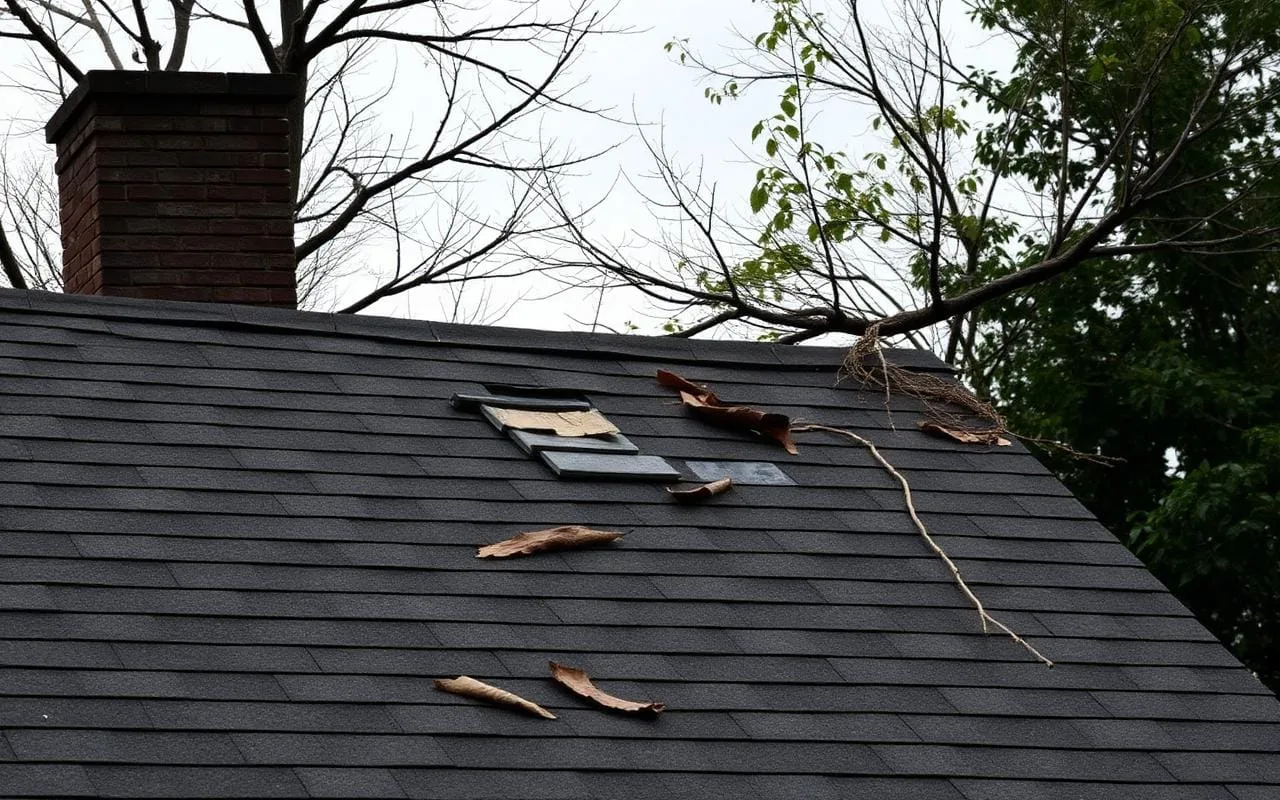
Most standard homeowners policies are written around sudden, accidental damage from a named or covered event. On a roof, that usually means wind, hail, a falling tree, or something like ice or a heavy storm doing damage in a single event. Here in Ocean and Monmouth County, the usual culprit is a nor’easter or coastal storm. Wind gets under a shingle edge, lifts it, and the rain behind it gets driven sideways into the gap.
Policies often treat two things separately: the damage to the roof itself, and the water damage inside the house (stained ceilings, wet insulation, ruined drywall). One can be covered and the other not, depending on your wording. Ask your insurer how they handle each.
When is a roof leak usually not covered?
Insurers generally expect you to maintain the roof. If a leak comes from something that wore out over time, they tend to call it a maintenance issue and decline it. The common ones we see:
- Shingles that have lost their granules and gone brittle from age and sun.
- Cracked or dried-out rubber boots around plumbing vents.
- Flashing around chimneys or walls that has pulled away or rusted through slowly.
- A slow drip that has stained the same spot of ceiling for months.
- Damage from clogged gutters backing water under the roof edge.
- Rot in the roof deck from a leak nobody caught.
Salt air and shore wind wear roofs faster near the water, so homes close to the bay in Brick or Point Pleasant often show this kind of slow wear earlier than people expect. That wear is exactly what an adjuster will be looking for.
| What caused the leak | How policies typically treat it |
|---|---|
| Wind lifted or tore off shingles in a storm | Often considered, as sudden damage |
| Tree or limb fell on the roof | Often considered, as sudden damage |
| Hail bruised or cracked shingles | Often considered, depending on policy |
| Old, worn-out shingles | Usually excluded as wear and tear |
| Failed vent boot or aged flashing | Usually excluded as maintenance |
| Leak ignored until rot or mold set in | Often limited or excluded as neglect |
How can you tell storm damage from wear and tear?
From the ground, often you can’t, and you shouldn’t climb up to find out. Roof access is a job for someone with the right gear. What a roofer looks for up there tells the story. Fresh storm damage tends to look recent: clean tears, creased shingles in one direction, missing tabs, bright exposed nail heads, debris on the roof. Long-term wear looks tired everywhere: curled edges across the whole slope, bald shingles, rusted flashing, dark stains on the deck underneath.
Some roofs show both. A tired roof can still lose shingles in a real storm. That’s why a written inspection describing what was found, with photos, is useful when you talk to your insurer. Our guide to spotting roof damage after local storms covers what you can safely check from the yard.
What should you document for a roof leak insurance claim?
- Write down the date and what the weather was doing when you first noticed the leak.
- Photograph the inside damage before you move or clean anything: ceiling stains, drips, wet floors, the attic if you can get there safely.
- Photograph the outside from the ground: missing shingles, debris, a fallen limb, shingles in the yard.
- Keep receipts for anything you spend to stop more water getting in, such as tarping or buckets and fans.
- Get the roofer’s findings in writing, with photos of the damaged area.
- Call your insurer, ask what they need from you, and note who you spoke to and when.
When you talk to the adjuster, stick to what you saw and when. Don’t guess at the cause or say the roof has leaked on and off for a while unless that’s true, because a guess can get written down as fact. Let the inspection speak to the cause.
Why stopping the water early matters for your claim
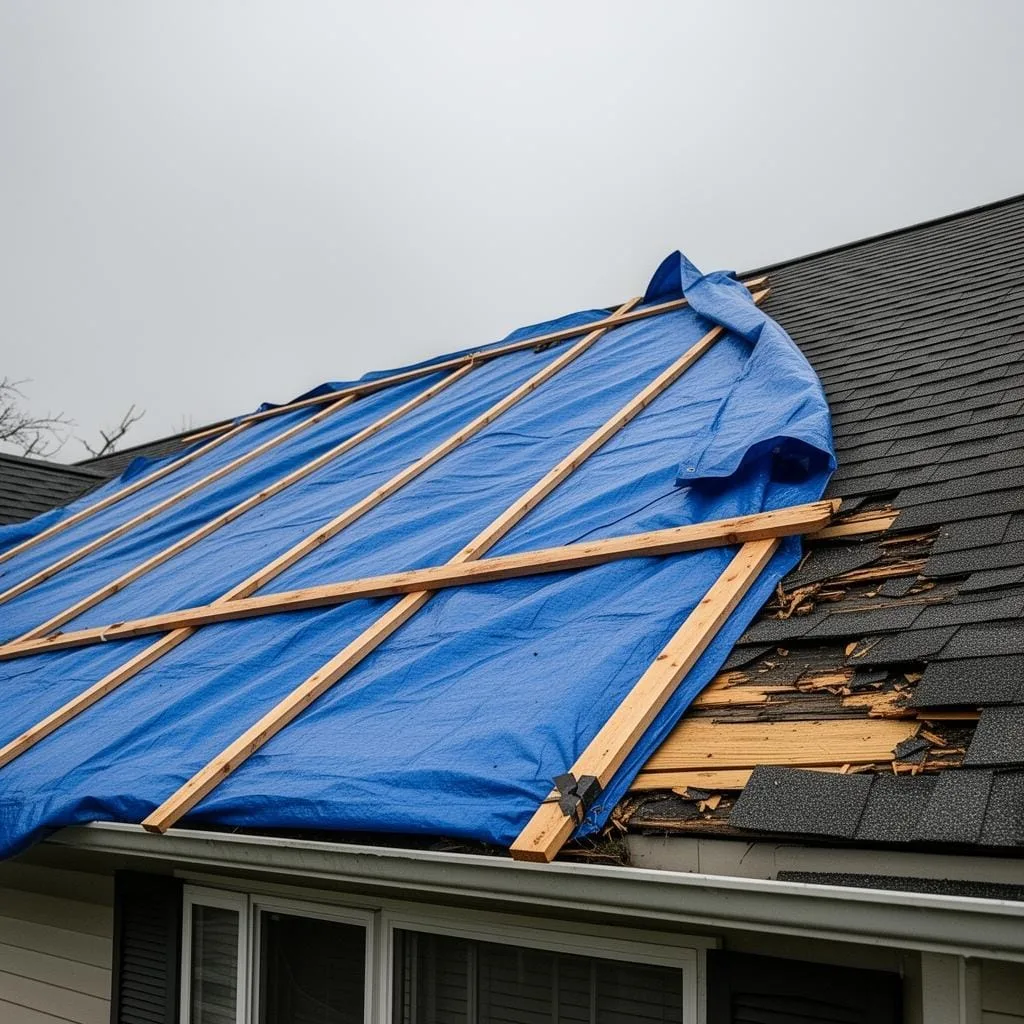
Most policies expect you to take reasonable steps to prevent further damage once you know about a leak. Waiting can hurt you twice: the damage spreads into insulation, drywall and framing, and the insurer may treat the extra damage as something you could have prevented. A tarp over the damaged section is usually the fastest fix. Customers often tell us they called after a storm with water coming in, and the first thing we did was tarp the area before coming back for the repair. Here’s when emergency tarping makes sense and what it involves.
Stop the water first, photograph everything, then make the call.
Do you need a full roof replacement or just a repair?
Don’t assume a leak means a new roof, with or without a claim. Many leaks trace back to a single failed spot: a lifted shingle, a cracked vent boot, a gap in the flashing. Customers often tell us they came to us expecting to hear they needed a new roof, and the leak turned out to be a repair. That’s worth knowing before you file. A small repair may come in under your deductible, and filing over a minor problem may not be worth it. Whether to file is your decision to make with your insurer.
Common questions about roof leaks and insurance
What happens if a roof leak is left untreated?
Water soaks into insulation and the roof deck, then works into drywall, framing and eventually mold. A repair that would have been simple can turn into deck replacement and interior work. Insurers may also treat damage that spread over time as neglect rather than sudden damage.
At what point will insurance replace a whole roof?
That depends on your policy, the extent of the damage, and whether the damaged section can be repaired to match. Some insurers will pay for a repair only, others for a larger section or full replacement when the damage is widespread. Ask your insurer how your policy handles it.
What roof damage does insurance most often refuse?
Gradual wear and tear is the most common reason a roof leak claim is turned down. That includes aging shingles, worn flashing and failed vent boots. Damage from a lack of maintenance, like clogged gutters, falls into the same group.
If you’re deciding what to do this week, use this rule: if the leak showed up right after a storm and you can see fresh damage, stop the water, document it, and call your insurer. If it’s been dripping slowly in the same spot, start with a repair estimate before you think about a claim. Either way, the first step is finding exactly where the water is getting in, which is what our roof leak repair service does before any fix begins.